

 Bob Scott
Table of Contents
- Why Tackle Storage Matters on a Bass Boat
- Bass Boat Tackle Storage Ideas for Different Boat Types
- Choosing a Fishing Tackle Storage System That Fits Your Needs
- Building Your Bass Boat Tackle Box Setup for Tournament Success
- How to Organize Fishing Tackle for Maximum Protection and Speed
- Waterproofing, Durability, and Locking Closures
- Real-World Bass Boat Storage Setups That Work
- Frequently Asked Questions
Last Updated: October 8, 2026
Why Tackle Storage Matters on a Bass Boat
Getting to the right lure fast separates winners from the rest of the field. On tournament day, every second counts. You’re scanning water conditions, adjusting your approach, and switching tackle constantly.
Poor organization costs you fishing time. A proper tackle storage system keeps everything accessible, protected, and organized so you can focus entirely on the catch.
At Easy View Tackle, we’ve watched tournament anglers and weekend fishermen alike struggle with generic storage solutions that don’t fit their boats or their fishing style. The right system isn’t one-size-fits-all.
Bass Boat Tackle Storage Ideas for Different Boat Types
Not all bass boats are built the same, and neither should their storage be.
Center Console Layouts
Center console boats offer unique challenges and opportunities. Your console typically dominates the deck, leaving limited flat storage space. You need solutions that work vertically or mount directly to existing structures.
Hanging storage works exceptionally well here. Clip strips and foam-filled hangers mount to the console itself, keeping lures at eye level and within arm’s reach. This approach maximizes your available space without consuming precious deck real estate.
Compartment-mounted systems also fit center consoles effectively. Small utility boxes fit into existing storage cubbies, and adhesive-mount or screw mounted tackle system attached to console sides allows for quick access baits.
Compartment-Based Setups
Larger bass boats with multiple storage compartments offer different possibilities. These boats typically have dedicated tackle storage areas built into the deck or console.
Hard-sided boxes fit neatly into these compartments and stack efficiently. Easy view tackle system uses the dead space under the lids to store your plastics,spinnerbaits,jigs,and pre-tied tackle for quick access. This allows you to setup your boat with both to give you maxium efficience on the water.
Choosing a Fishing Tackle Storage System That Fits Your Needs
The best choice depends on your fishing style, boat layout, and priorities.
Hard-Sided Boxes vs. Hanging Storage
Hard-sided boxes offer protection and durability. They resist impact, and stack efficiently in compartments. They work well if you’re willing to open a box to access tackle.
Hanging storage prioritizes quick access. Clip strips and foam-filled crankbait hangers let you grab your lure. You see your entire selection at a glance. This tackle system works great if you are wanting to elimlnate the downtime on the water searching for tackle. This matters in tournament situations where seconds count.
Many serious anglers use both. Hanging storage for their most-used lures, hard boxes in compartments for backup gear and terminal tackle.
Compartment Layout and Adjustable Dividers
Organization within your storage system determines whether you find what you need instantly or waste time searching.
Adjustable dividers let you customize compartment sizes based on what you’re storing. Crankbaits need more space. Soft plastics benefit from shallow compartments. A system with flexible dividers adapts as your fishing style evolve
Building Your Bass Boat Tackle Box Setup for Tournament Success
Tournament fishing demands speed and reliability. Your tackle storage system must deliver both.
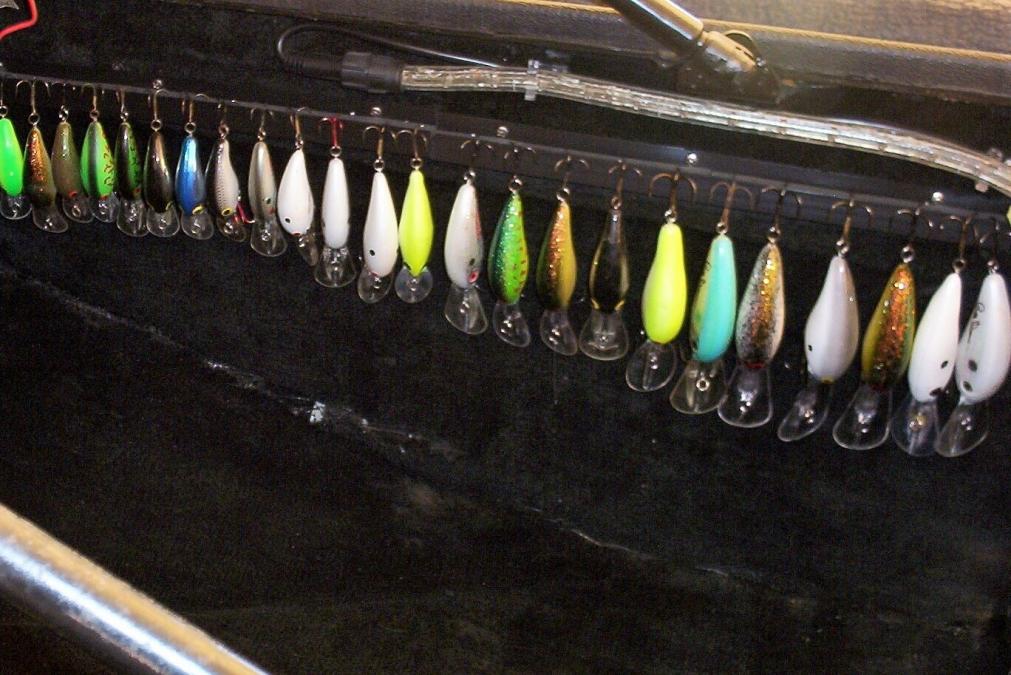
Professional angler organizing multiple fishing lures and tackle on a bass boat with clip strips and foam hangers mounted to the lids and inside compartments, showing real-world on-water organization with crankbaits and soft plastics visible
Organizing by Lure Type and Fishing Technique
Structure your storage around how you actually fish. If you rely heavily on crankbaits, dedicate your most accessible storage to them. If soft plastics dominate your approach, organize those prominently.
A logical system might look like this: hanging crankbaits on foam-filled hangers for instant visibility, soft plastics clip to compartment lids so you can access quickly and terminal tackle (hooks, weights, swivels) in utility boxes.
Tournament anglers often organize by water conditions too. One section for shallow-water presentations, another for deep-water techniques. This mental organization reduces decision time when conditions change mid-tournament.
Quick-Access Placement on Deck
Where you mount your storage matters as much as what’s inside it. Your most-used tackle should be within arm’s reach without moving your feet.
Mount hanging storage on the console on center console boats where you can grab baits quickly. Position compartment boxes under console.
The Easy View Tackle system‘s patent-designed clip strips and foam-filled hangers mount securely even in rough water conditions, so your tackle stays accessible and protected during aggressive maneuvering.
How to Organize Fishing Tackle for Maximum Protection and Speed
Speed means nothing if your lures are damaged. Protection and accessibility must work together.
Protecting Hooks, Soft Plastics, and Crankbaits
Crankbait hooks rust easily when stored in contaners that can generate condensation. Soft plastics lose their scent and salt when removed from the orginal bag they came in. Crankbaits chip and crack if if stored in boxes during rough water situation on the lake. Your storage system must prevent these failures.
Foam-filled hangers store crankbaits safely, preventing the hooks from rusting and protect the points from damage.
Hanging storage generally offers better protection for crankbaits than loose storage in a tackle box. The foam protects the points and the barbs of your hooks and keeps lures seperate to minimize body damage.
Managing Heat, Humidity, and Corrosion
Boats spend time in sun, spray, and humid air. These conditions damage tackle quickly.
Hard-sided boxes with tight seals minimize moisture exposure. Ventilation matters too, some moisture is inevitable, so choose systems that allow air circulation. Avoid storing tackle in sealed compartments where condensation builds up. (Condensation is your worst enemy) causes rusted hooks,spinnerbait skirts damage (falling off) easy view tackle system elimlnates this damage to your tackle by air drying the all of your baits
Stainless steel and corrosion-resistant hardware last longer in saltwater and brackish environments. If you fish freshwater, standard hardware works fine, but saltwater anglers should prioritize corrosion-resistant components.
Waterproofing, Durability, and Locking Closures
Your tackle storage needs to survive rough conditions and rough handling.
Waterproof or water-resistant construction protects your gear from spray, rain, and accidental submersion. Hard-sided boxes with sealed lids offer this protection but not from condensation over time. Easy view tackle system is not exposed to these elements. It mounts under your lids and condensation is not an issue.
The best tackle storage for bass boats combines these features: secure mounting, waterproof materials, corrosion-resistant hardware, and reliable closures that keep your gear safe and accessible. Easy view tackle system is built with heavy duty spring steal powder coated clip strips and stanless steel screws with plastic mounting hardware.
Real-World Bass Boat Storage Setups That Work
Abstract advice only goes so far. Here are three concrete setups, each built around a different boat layout and fishing style, with the reasoning behind every choice.
Setup 1: The Tournament Rig
Boat type: 20-foot bass boat.
Configuration:
- In front storage compartment : Easy view clip strips mounted , two for plastics and one for spinnerbaits,topwaters. on the side, two crankbait hangers so the angler can grab baits easy.
- In the bow compcompartmentartment: two stacked 3700-series boxes, one for hard baits and one for jigs, terminal tackle.
Why it works: The most-used lures are within arm’s reach. Backup gear is protected in sealed compartments. The angler never has to open a box to reach a primary lure, which is the whole point of a tournament setup.
Frequently Asked Questions
How do you keep fishing lures from tangling and getting damaged on a boat?
Use foam-filled crankbait hangers to protect hooks from damaged to the points and barbs. Store soft plastics in sealed bags to keep them separated and fresh. Keep terminal tackle (hooks, weights, swivels) in sealed containers.
Is a tackle box or hanging storage system better for bass boat fishing?
Hanging storage systems offer faster access during tournaments since you can see and grab lures without opening boxes. Hard-sided tackle boxes provide better protection for terminal tackle hooks,and weights especially in rough water. Many serious bass anglers use both: a hanging system for easy access to baits and quick to retrieve. Tackle boxes for backup tackle stored in compartments. Choose based on your boat layout, how much tackle you carry, and whether speed or protection is your priority.