

 Bob Scott
Table of Contents
- Why Boat Storage Matters for Tournament Success
- Bass Boat Tackle Storage Ideas That Win Tournaments
- Tackle Bag vs Tackle Box for Boat Storage
- Soft Plastic Lure Storage Solutions
- Boat Tackle Storage Systems That Fit Tight Spaces
- Tournament Preparation: Storage Workflow That Saves Time
- Protecting Expensive Tackle in Rough Water Conditions
- Frequently Asked Questions
Last Updated: October 11, 2026
Why Boat Storage Matters for Tournament Success
Tournament fishing demands precision, speed, and access. Disorganized tackle wastes valuable seconds searching instead of fishing. The best boat storage for tournament anglers eliminates that friction.
Easy View Tackle was founded by tournament fisherman Bob Scott to solve this problem. A well-organized boat with the best boat storage for tournament anglers keeps your gear protected, accessible, and ready for rapid deployment when conditions change.
Poor storage costs you in bent hooks, tangled lines, wasted minutes, and damaged equipment. The right storage system transforms your boat into an efficient fishing platform.
Bass Boat Tackle Storage Ideas That Win Tournaments
Bass boats present unique storage challenges: limited space, constant vibration, and layout constraints. Tournament anglers need systems that fit their specific boat configuration while keeping tackle accessible and protected.
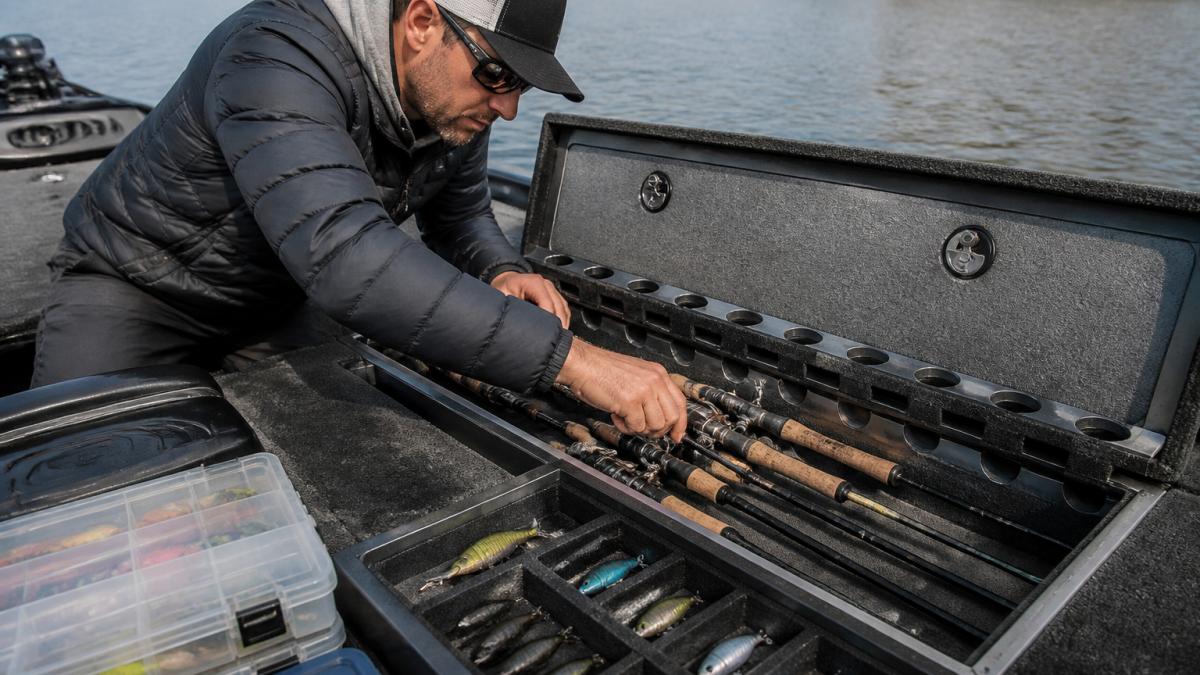
Effective bass boat tackle storage combines multiple types: rod storage that prevents tangling, lure storage that keeps hooks sharp, and quick-access systems for active baits. Many tournament anglers use a layered approach: permanent storage for backup gear, mid-deck organization for active tackle, and a portable bag for lures being tested.
Easy way to organize your boat and tackle for a day on the water or a tournament is the (Easy View Tackle System). The system allows you to set up your boat where you have easy access to your tackle and quick retrieve of the baits of your choice.
Rod and reel organization
Rods and reels represent your largest investment and most critical tools. Horizontal rod racks work well in bass boats because they keep rods secure during rough water and prevent tangling.
Mount rod holders along your gunwale or use deck-mounted racks that don’t interfere with casting. Tournament anglers typically keep 4-6 rigged rods within arm’s reach, organized by purpose: power fishing rods separate from finesse rods, topwater setups distinct from deep-diving crankbait rigs.
Lure and jig accessibility
Your most-used lures need instant accessibility. Tournament fishing means rapid changes as you test presentations. Soft plastics, crankbaits, jigs, and topwater baits each require different storage to prevent damage and tangling.
Crankbaits with treble hooks need protection from moisture. Foam-filled crankbait hangers keep crainkbaits easy to locate and prevent hook points and barb from dulling. Crankbaits with multiple treble hooks demand organized storage that prevents lures from damaging each other.
Use backup lures in plastic access trays with sealed compartments, specialty baits organized by water condition. This structure lets you make tactical decisions without fumbling.
Easy View Tackle Crankbait hangers will work great for your (Hot) quick go to crainkbaits. They are easy to view and quick to retreive when needed.
Tackle Bag vs Tackle Box for Boat Storage
Tournament anglers face a critical choice: stationary tackle boxes or mobile tackle bags. The right decision depends on your boat layout, tournament format, and fishing style.
Tackle boxes: Permanent boat storage
Hard tackle boxes excel as stationary storage secured in boat compartments or under-deck lockers. They protect expensive lures from impact, water intrusion, and UV damage.
Opening a secured box, locating your lure, and closing it takes 8-12 seconds per change. In a tournament testing 15-20 presentations, that’s 2-3 minutes of dead time.
Measure your boat’s storage compartments before purchasing. A box that doesn’t fit becomes deck clutter that costs you fishing room.
Tackle bags: Active-fishing organization
Rolling tackle bags and soft-sided organizers keep working lures within arm’s reach. A quality tournament bag holds most-used presentations and allows lure swaps in 2-3 seconds.
The trade-off is protection. Soft bags don’t shield lures from impact during rough water. Lures in open-top trays can get wet during rain or wave spray.
Tournament-specific selection criteria
Choose based on your actual tournament schedule and boat type:
- If you fish 8+ tournaments per season on the same lake: Use a tackle box for permanent storage in your boat. Organize it once, replicate it for every event. This eliminates weekly packing and reduces setup time at the launch.
- If you fish different lakes or travel between regions: Use a rolling bag for your active tackle. Pack it the night before each tournament, transport it to the boat, and set it on your deck. This flexibility lets you adjust lure selection for different water conditions without reorganizing permanent storage.
- If your boat has limited deck space (center console, jon boat, or compact sport boat): Prioritize a bag. Boxes consume valuable fishing room. A bag can be repositioned or removed when you need open water for casting or netting.
- If you run rough water or offshore conditions: Prioritize a secured box. Impact protection matters more than speed when lures cost $8-15 each and you’re running at 30+ mph in 3-foot seas.
The tournament-winning hybrid approach
Most competitive anglers use both. A tackle box stays permanently mounted, holding 150+ backup lures organized by technique.
This system gives speed when it matters, protection for expensive gear, and flexibility to adjust your approach.
Soft Plastic Lure Storage Solutions
Soft plastics require different storage than hard baits. They dry out and degrade if exposed to direct sunlight or extreme temperatures. Tournament anglers need storage that maintains soft plastic condition.
Sealed plastic containers with silicone-lined compartments keep soft plastics organized and protected away from direct sunlight and extreme heat. Organize by color, size, and type to quickly find specific presentations.
Keep soft plastics separate from hard baits to prevent oil transfer and puncture damage. Waterproof containers prevent moisture damage. Organize soft plastics the week before competition.
The Easy View Tackle System offers a great solution for plastics. The system attaches to the lids of your boat allowing you to find and retreive baits quick. You can keep your baits in the orginal bags they came in which preserves the scient and salt in the baits. Clip back flap of the ziplock bag into the clip jaws now you do not have to remove the bag to retrieve a bait. Just pull on the front flap grab a bait and back to fishihg. You can close the bag when the day is over.
Boat Tackle Storage Systems That Fit Tight Spaces
Not every boat has unlimited storage. Center console boats, jon boats, and smaller sport boats require creative storage solutions that don’t consume fishing space.
Center console customization
Center console boats demand efficient storage. Vertical rod storage along the console saves deck space. Under-console compartments work well for sealed tackle boxes. Deck-mounted trays with quick-release hardware let you remove storage when needed.
Customize storage to your boat’s layout. Measure compartments, identify unused vertical space, and build storage around your boat’s configuration. Adhesive-mount systems customize storage without permanent modifications.
Waterproof and durable containers
Waterproof, impact-resistant containers protect tackle during rough water. Silicone-lined bases prevent lures from shifting during acceleration or turns.
Durable storage with corrosion-resistant hardware and UV-resistant plastics extends system life through thousands of miles of boat operation.
Tournament Preparation: Storage Workflow That Saves Time
Tournament success depends on pre-event preparation and post-event reset. A repeatable workflow eliminates scrambling and extends tackle life.
Pre-tournament preparation: 5-7 days before launch
Research the tournament lake: seasonal patterns, catch reports, and weather forecasts. Identify water conditions to determine which presentations will work.
Organize tackle by technique and target depth. Separate power-fishing lures from finesse presentations.
Stock your active-fishing bag with 30-40 lures. Include 2-3 backup options for each primary presentation.
Inspect all rods and reels. Check drag systems, clean guides, and retie worn knots. Test rod holders for security.
Verify all containers are sealed and secure. Check adhesive mounts and hardware are tight and won’t shift during acceleration.
During a practice run 2-3 days before the tournament, test your entire storage system.
Document your setup. Photograph your organized tackle, rod positions, and container placement. This visual reference lets you replicate your setup for future tournaments without rebuilding from scratch.
Post-tournament reset: Within 24 hours of weigh-in
The hours after a tournament are when most anglers neglect their gear. Wet tackle, used lures, and disorganized containers get shoved back in storage.
Establish a post-tournament routine you follow after every competition:
- Dry all wet tackle. Remove any lures that were in the water or exposed to rain. Lay them on a towel in a well-ventilated space for 4-6 hours. Soft plastics should be separated and laid flat. Crankbaits and jigs should be stood upright so water drains from hook eyes. This prevents rust on treble hooks and mold on soft plastic packaging.
- Inspect for damage. Check every lure you used for bent hooks, cracked bodies, or dulled finishes. Discard lures with damaged hooks, they won’t hook fish reliably. Replace crankbaits with cracked bodies; they won’t track straight. Sharpen or replace jig hooks if the barb is dulled.
- Clean your containers. Wipe down the interior of tackle bags and boxes with a dry cloth. Remove any debris, sand, or water residue. Leave containers open to air-dry for several hours. This prevents mold and odor that can develop in sealed, damp storage.
- Inventory and restock. Count the lures you used and note which presentations worked best. Replace any lures you lost or damaged. Move high-performing lures to the front of your active-fishing bag for the next tournament. Move underperforming lures to backup storage or remove them entirely.
- Organize by next tournament. If your next event is on a different lake, reorganize your tackle for those conditions. If it’s the same lake, keep your setup intact but refresh any lures that showed wear. This prevents the scramble of last-minute packing.
- Check rods and reels. Rinse rods with fresh water if you fished saltwater or stained freshwater. Wipe reels clean. Check that drag systems still move smoothly after a full day of use. Retie any knots that look worn from casting.
- Secure everything. Verify that all containers are sealed, all mounts are tight, and nothing is loose in your boat. A container that shifted during the tournament might shift again, fix it now before the next event.
This 30-45 minute routine, performed within 24 hours of weigh-in, keeps your boat tournament-ready and extends the life of expensive tackle.
Protecting Expensive Tackle in Rough Water Conditions
Rough water tests every storage system. Waves create impact forces that damage tackle and dislodge unsecured containers. Tournament anglers need storage that protects expensive lures and keeps everything in place during challenging conditions.
Secure all containers with hardware or adhesive mounts rated for marine use. Loose tackle becomes projectiles in rough water. Soft plastic containers should be sealed and stored low in your boat to maintain stability. Hard cases need secure mounting that prevents shifting during turns or acceleration.
Foam-filled hangers protect crankbaits and jigs by absorbing impact and preventing hooks from contacting other lures. Silicone-lined compartments prevent lures from sliding during rough water. Tournament conditions often mean running at speed in challenging water. Your storage system needs to protect tackle during these demanding situations.
Easy View Tackle‘s patent-designed clip strips and foam-filled hangers are engineered specifically for rough water conditions. The foam absorbs impact while the secure mounting keeps tackle exactly where you placed it. This protection means your expensive lures arrive at weigh-in in perfect condition.
Frequently Asked Questions
What is the best way to organize tackle in a bass boat?
The best boat storage for tournament anglers combines quick access with protection. Use rod racks or rod lockers to secure rods vertically, dedicate shallow compartments for pre-rigged lures and jigs, and store soft plastics in waterproof containers away from direct sun. Group lures by type and color so you can grab what you need in seconds. Tournament pros keep their most-used patterns within arm’s reach and secondary options in deeper storage.
How do tournament anglers store soft plastics?
Soft plastic lure storage requires protection from heat, UV exposure, and tangling. Use clear, waterproof utility trays with dividers so you can see colors instantly without opening multiple containers. Store soft plastics flat or rolled separately from hard baits to prevent degradation. Keep them in a cool, shaded compartment or under a cover. Many tournament anglers use small zippered bags organized by size and color inside larger waterproof containers for portability between practice and competition days.
Are tackle bags or tackle boxes better for boat storage?
Tackle boxes work best for stationary boat storage because they maximize capacity and protect gear in rough water. Tackle bags offer portability and quick access but hold less and expose contents to weather. For tournament anglers, the ideal approach combines both: a tackle box system mounted in your boat for primary storage, plus a portable tackle bag for running to the dock or switching between boats. This hybrid strategy keeps expensive lures protected while maintaining tournament-speed access.
How do you keep fishing lures from tangling in a boat?
Tangled tackle wastes critical tournament time. Prevent tangles by storing lures in individual compartments or on foam-filled hangers that isolate hooks and line. Use utility trays with slotted bases so crankbaits sit upright without touching. Store soft plastics in separate waterproof containers away from hard baits. Keep rods in dedicated rod holders or racks rather than loose in the boat. Custom boat tackle storage systems with clip strips and foam hangers are designed specifically to eliminate tangling even in rough water conditions.
Tournament fishing demands organization that works under pressure. The best boat storage for tournament anglers combines quick access with secure protection, letting you focus on fishing instead of searching. Easy View Tackle’s customizable storage system fits any boat layout and keeps your tackle organized, protected, and ready. Your tackle organization directly impacts your tournament results. Shop now and transform your boat into a competitive advantage.